When talking about negative aspects of marketing and the market place, we not only have to talk about marketing strategies but also how the consumer plays a role. For this I like to look at Maslow's hierarchy, which is still found to be relevant in 2014's narcissistic, technologically driven society. Maslow's theory states in this order of importance, physiological, safety, belonging, self esteem and self-actualization. These needs are believed to be the pattern of human motivation, and once each level is fulfilled the individual can move to the next level.
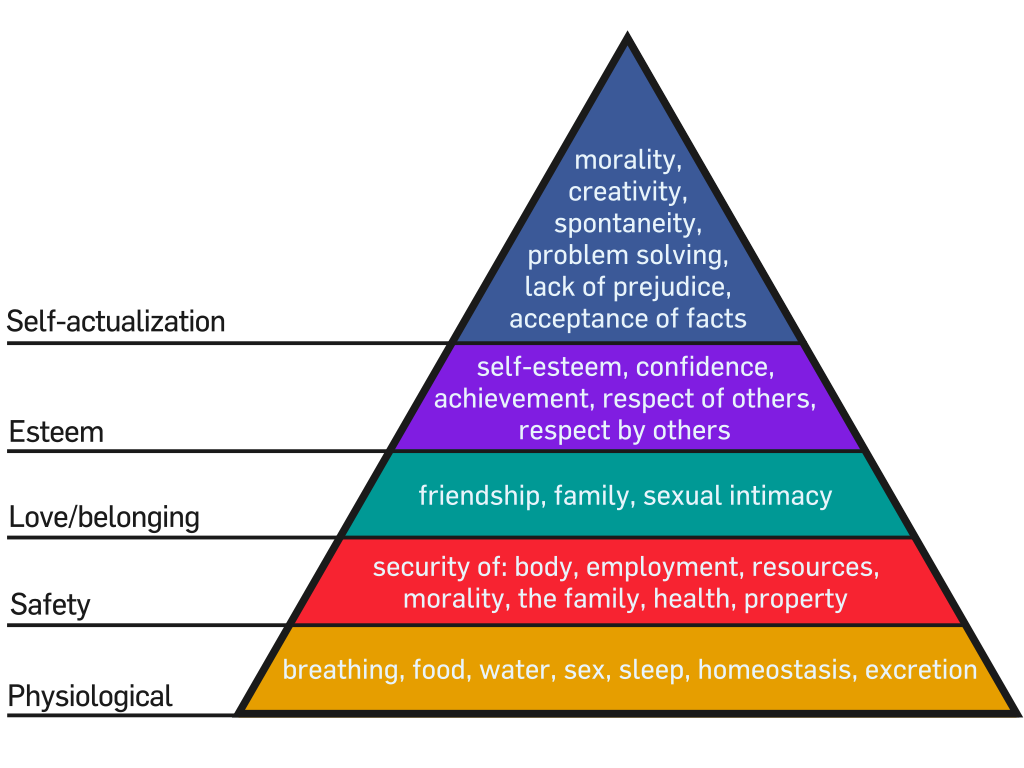 |
| Maslow's Hierarchy |

I see physiological needs and safety falling in the same category; if you do not have these elements you will not survive and if you do you are one of few. Belonging and esteem are somewhat interchangeable depending on what the individual values. I place a higher value on self-actualization than esteem and belonging. Self-actualization should be the most important priority instead of the final one. Self-actualization is when individuals can work on themselves which is a very important part of our growth and development; it essentially defines our inward person.
But in the technological revelation we got wrapped up in the internet and ourselves. The best description of Maslow's new hierarchy based on the internet, essentially makes fun of society and the priorities that have developed.

No comments:
Post a Comment